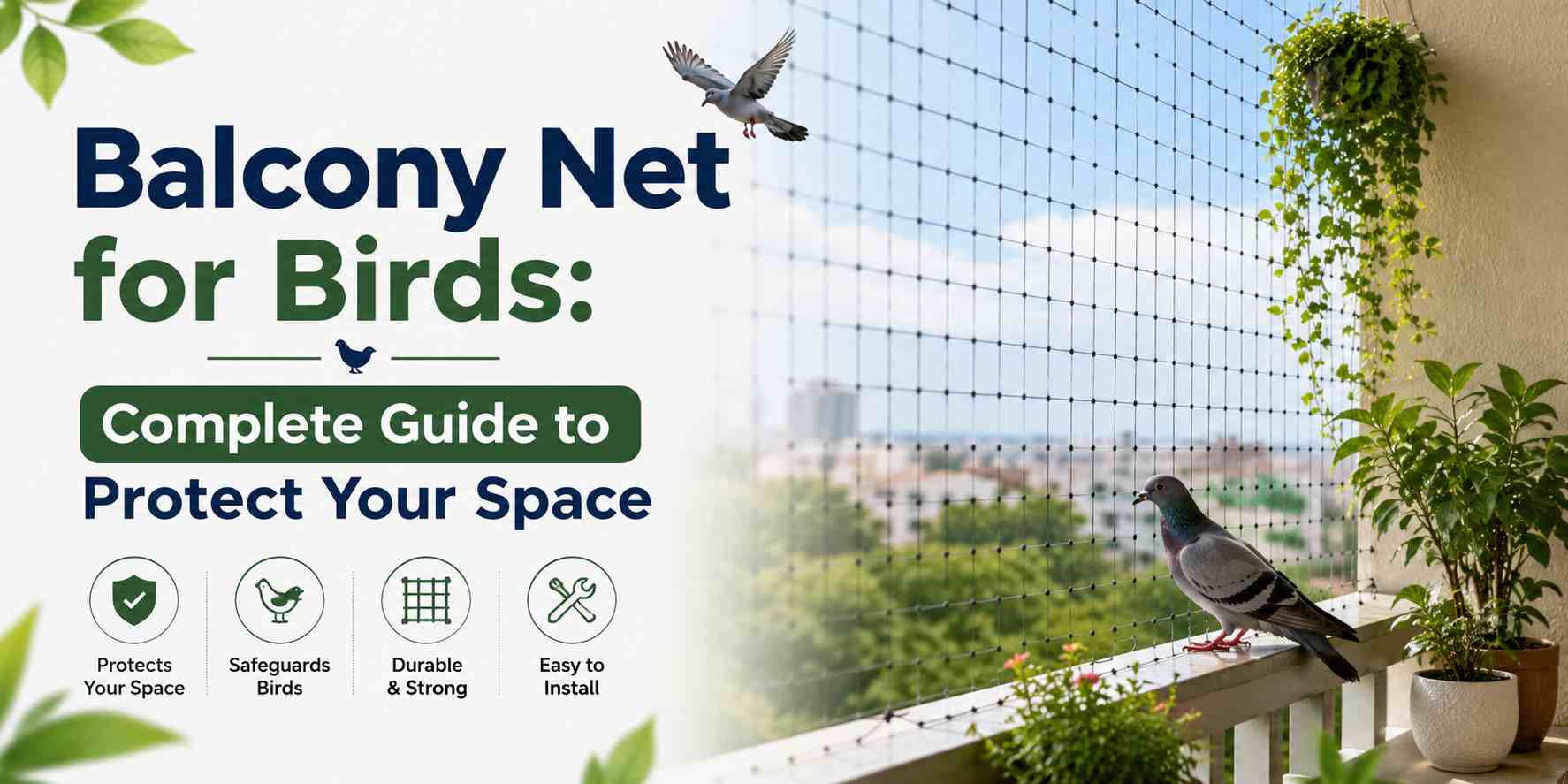
If you’ve ever stepped onto your balcony only to find it covered in droppings, feathers, or nesting debris, you’re not alone. Pigeons, sparrows, and mynahs have a way of turning a peaceful outdoor space into their personal lounge. The good news? A balcony net for birds is one of the most effective, humane, and long-lasting solutions available — and it’s far simpler to set up than most people think.
This guide walks you through everything you need to know: why bird netting matters, how to choose the right net, and how to approach bird netting installation the right way.
Why a Balcony Net for Birds Is Worth It
Birds aren’t just a nuisance on balconies — they can cause real damage. Their droppings are acidic and can erode paint, stain tiles, and corrode metal railings over time. Nesting materials block drains and create fire hazards. Worse, birds carry mites, ticks, and airborne pathogens that pose health risks to your family.
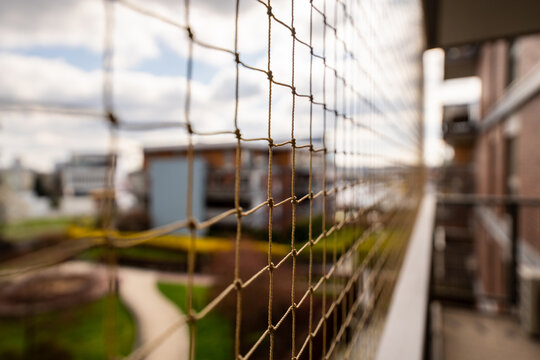
A quality balcony net for birds creates an invisible barrier that keeps birds out without harming them. Unlike spikes or chemical repellents, bird netting is a clean, permanent fix. It doesn’t disrupt your view, doesn’t hurt the birds, and once installed correctly, it requires almost no maintenance.
For apartment dwellers especially, this is one of the most practical home upgrades you can make.
Read Related – Understanding Pigeon Infections: Causes and Treatments
Choosing the Right Net for Bird Cage and Open Balconies
Not all bird nets are created equal. Whether you need a net for bird cage enclosures or an open balcony barrier, the material and mesh size matter a great deal.
HDPE (High-Density Polyethylene) is the most commonly recommended material. It’s UV-resistant, weatherproof, lightweight, and doesn’t rust or rot. Most good-quality balcony nets are made from HDPE and carry a lifespan of 5 to 10 years.
Mesh size is the other key variable. For large birds like pigeons and crows, a 50mm mesh is typically sufficient. For smaller birds like sparrows and mynahs, opt for a 25mm or even 19mm mesh. If you’re using a net for bird cage applications — for instance, to enclose an outdoor aviary or a pet enclosure — you’ll want a finer mesh that prevents even the smallest birds from squeezing through.
When buying, also look for:
- Knot type — knotted nets are more durable than knotless ones for outdoor use
- Colour — white nets blend well with most buildings; black nets are less visible from a distance
- Load-bearing capacity — relevant if you’re covering a large span
Bird Netting Installation: Step-by-Step
Bird netting installation can be done as a DIY project or through a professional service. Either way, understanding the process helps you make informed decisions.
Step 1 — Measure your balcony carefully. Measure the full perimeter and the height you want to cover. Add about 10–15% extra to your net dimensions to allow for anchoring and overlap.
Step 2 — Install anchor hooks or eye bolts. These go into the wall, ceiling, and floor of your balcony at regular intervals — typically every 30 to 45 cm. Use stainless steel hardware to prevent rusting.
Step 3 — Run tensioning wire or rope. A perimeter wire anchored through the hooks creates a firm frame for the net to attach to. This ensures the net stays taut and doesn’t sag.
Step 4 — Attach the net. Clip or tie the netting to the perimeter wire using cable ties or net clips. Work section by section to keep tension even. Ensure there are no gaps, especially at corners and edges — birds are remarkably good at finding the one weak spot.
Step 5 — Inspect and test. Walk the perimeter and check for any looseness, gaps, or sections that could be pushed inward. A well-installed net should feel firm and show no obvious entry points.
For large or high-rise balconies, it’s strongly advisable to hire a professional. Working at height with drilling equipment carries real risks, and professionals have the tools and training to do it safely and precisely.
Read Related – 7 Reasons Stainless Steel Bird Spikes Are Best Today
Maintenance Tips to Keep Your Net Effective
Once your balcony net for birds is in place, a little care goes a long way.
Check the net every few months for signs of wear, UV degradation, or damage from birds pecking at it. Clean it occasionally with a mild detergent and water — this prevents the buildup of dust and debris that can weaken the fibres over time.
If you notice a section has torn or come loose from its anchor, repair it promptly. A small gap today can become a full bird colony tomorrow.
Final Thoughts
A balcony net for birds is one of the smartest investments you can make for your home. It’s humane, effective, durable, and surprisingly affordable. Whether you’re setting up a net for bird cage enclosure or protecting an open balcony, choosing the right material and following correct bird netting installation practices makes all the difference.
Bird droppings carry harmful bacteria, fungi, and parasites that can affect your family’s health. Learn more about the health risks associated with bird droppings and why prevention is always better than cure.
Don’t wait for the problem to get worse — a well-installed bird net gives you your balcony back, for good.