Let’s discuss all about pigeon spikes ….
Outdoor pigeon problems usually start small: a few birds on a balcony rail, a little mess on a ledge, or nesting near an air-conditioning unit. Over time, those visits can turn into stains, noise, blocked gutters, and surfaces that feel unpleasant to use. Pigeon spikes and other anti bird spikes offer a simple, humane way to discourage birds from landing in the wrong places while keeping outdoor areas cleaner and easier to maintain.
Why Do Pigeon Spikes Work Outdoors?
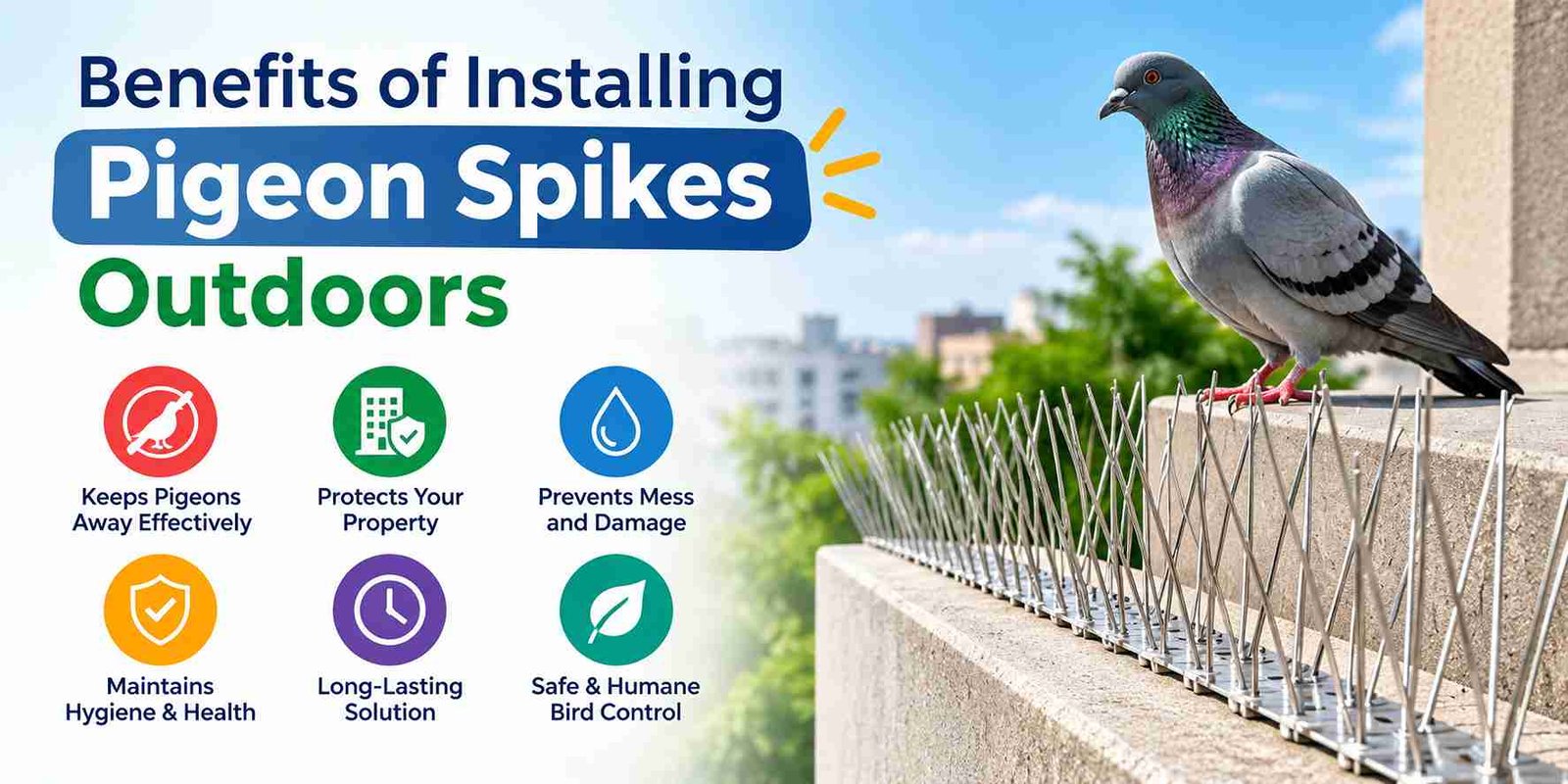
Pigeon spikes work because they make narrow landing spots uncomfortable and impractical for birds without trapping or harming them. When installed on ledges, parapets, balcony edges, signs, beams, and rooflines, the spikes interrupt the flat surface pigeons normally use for perching. Instead of settling there, birds look for a more suitable resting place away from the protected area.
This is why pigeon protection spikes are often used in outdoor spaces where cleaning alone does not solve the problem. Pigeons are persistent, especially when they have already identified a ledge or balcony as a safe perch. Spikes change the physical conditions of that surface, making return visits less appealing.
The goal is not to injure birds. Good-quality anti pigeon spikes create a visual and physical barrier that guides pigeons elsewhere. For homeowners, tenants, property managers, and shop owners, that can mean fewer droppings, less surface damage, and more usable outdoor space.
Cleaner Balconies, Ledges, And Outdoor Living Areas –
One of the most noticeable benefits of installing balcony pigeon spikes is the reduction in droppings on floors, railings, furniture, and window sills. Pigeon mess is not just unsightly; it can make an otherwise pleasant balcony feel dirty and difficult to enjoy. If birds are landing daily, regular sweeping or washing quickly becomes frustrating.
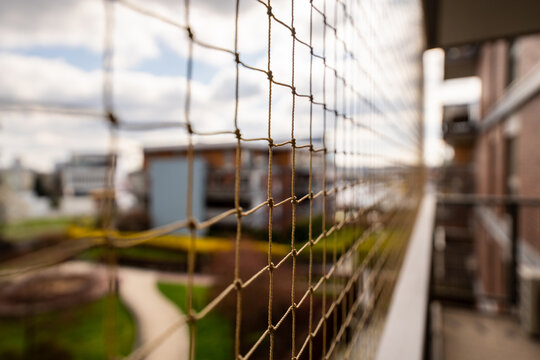
Spikes help protect the exact spots pigeons prefer. On balconies, that may include the top of railings, outer ledges, air-conditioner brackets, shade structures, and corners near walls. Once birds can no longer perch comfortably in those areas, the amount of mess below often becomes much easier to manage.
Cleaner outdoor areas also feel more welcoming. A balcony can go back to being a place for morning coffee, plants, fresh air, or drying clothes rather than a space you avoid because it needs another round of cleaning. For businesses, cleaner entrances, signs, and façades help maintain a more professional appearance.
Read Related – Effective Ways to Get Rid of Pigeons: Complete Guide
Protection For Building Surfaces And Fixtures –
Pigeons can create problems beyond visible dirt. Repeated droppings can stain paint, stone, metal, tiles, and concrete. Nesting materials may clog drains or gutters, and constant bird activity around light fixtures, signage, solar panels, and exterior equipment can make maintenance more complicated.
Bird spikes help by reducing the time pigeons spend on vulnerable surfaces. When birds cannot settle on a ledge or beam, there is less buildup in one concentrated area. This can help preserve finishes, reduce unpleasant odors, and limit the need for harsh cleaning products.
Outdoor fixtures are especially worth protecting because they can be awkward or costly to access. A strip of anti bird spikes on the right edge may prevent repeated mess on a signboard, security camera housing, awning, or decorative trim. The benefit is practical: fewer bird-related issues in places that are inconvenient to clean.
A Humane Deterrent When Installed Correctly –
Many people hesitate to use bird control products because they worry about harming wildlife. Properly chosen and installed bird spikes are designed as deterrents, not traps. They do not capture birds, block them inside a space, or rely on chemicals.
The key is correct placement. Spikes should be installed on perching surfaces, not in a way that traps nesting birds or blocks active nests with eggs or chicks. If nesting is already present, it is better to check local rules and handle the situation responsibly before installing any deterrent.
Humane pigeon control is also about prevention. Once a surface is protected, pigeons receive a clear signal that the spot is unsuitable. That helps avoid repeated conflict between people trying to clean and birds returning to the same comfortable ledge.
Where Should Outdoor Bird Spikes Be Installed?
Outdoor bird spikes should be installed on the specific surfaces where pigeons land, perch, or gather, not randomly across the whole property. Common spots include balcony rails, window ledges, roof edges, parapet walls, beams, pipes, signs, awnings, and tops of outdoor units. The more accurately you target the birds’ preferred landing zones, the better the results are likely to be.
Before installing, observe the area for a few days if possible. Notice where droppings collect, where birds sit at different times of day, and whether they are using the space for short rests or longer nesting activity. This quick inspection helps you choose the right coverage and avoid wasting material.
Useful installation planning points include:
- Measure the surface width. Wider ledges may need more than one row of pigeon spikes to prevent birds from landing behind the first row.
- Clean before fitting. Remove droppings, dust, feathers, and loose debris so adhesive or fasteners can hold properly.
- Cover the full landing line. Leaving large gaps may allow pigeons to perch between protected sections.
- Choose materials for the weather. Outdoor spikes should handle sun, rain, wind, and temperature changes.
- Avoid active nests. If birds are nesting, resolve that issue legally and humanely before installation.
Good placement makes the difference between a neat deterrent and a frustrating half-solution. A small gap in the wrong place can become the new favorite perch.
Lower Cleaning Effort And Maintenance Costs Over Time –
Cleaning pigeon droppings from outdoor surfaces can take time, water, tools, and protective care. If the affected area is high or hard to reach, cleaning may also require ladders or professional help. By discouraging birds from landing in the first place, spikes can reduce how often those cleanups are needed.
This is where the value of anti pigeon spikes becomes more obvious. The initial installation is a preventive step. Instead of repeatedly reacting to the same mess, you are changing the conditions that allow the mess to build up.
For residential spaces, that may mean less weekend cleaning and fewer unpleasant surprises on balcony floors. For commercial properties, it may mean more presentable storefronts, cleaner outdoor seating edges, and fewer complaints from visitors or tenants. Even when occasional cleaning is still needed, the workload is usually easier when birds are not gathering in the same place every day.
Choosing The Right Type Of Pigeon Spikes –
Not all spikes are identical. Some are made from stainless steel, others from UV-resistant plastic, and many combine a plastic base with metal pins. The right choice depends on the surface, weather exposure, appearance preferences, and the level of pigeon activity.
Stainless steel spikes are often chosen for durability and a discreet look from a distance. Plastic spikes can be useful where corrosion resistance, lighter weight, or budget is a priority. The base width, spike height, and number of rows also matter, especially on wider ledges.
When comparing options, consider:
- Surface type: Concrete, metal, wood, tile, and painted surfaces may need different adhesives or fasteners.
- Exposure: Areas with strong sun, heavy rain, or coastal air should use materials suited to outdoor conditions.
- Visual impact: Clear or slim designs may blend better on residential balconies and visible façades.
- Bird pressure: A heavily used perch may need wider coverage or a stronger installation method.
- Access for maintenance: Choose a solution that can be inspected and cleaned if leaves or debris collect nearby.
The best bird spikes are not necessarily the most aggressive-looking ones. They are the ones that fit the surface, stay secure, and block the actual landing space pigeons use.
What Affects Bird Spikes Price?
Bird spikes price can vary based on material, length, base design, spike density, brand, and whether installation accessories are included. A small balcony ledge will usually require less material than a long roofline, shop sign, or multi-level façade. Professional installation may also affect the total cost if the area is high, difficult to reach, or requires special safety equipment.
It helps to think in terms of total coverage rather than only the price of one strip. Measure the areas that need protection and allow for corners, gaps, and wider surfaces. Buying too little can leave exposed sections that pigeons continue to use, while buying the wrong style may require replacement sooner than expected.
A practical budget checklist includes:
- Total length of ledges, rails, beams, or signs to protect
- Width of each landing surface and whether one or two rows are needed
- Material preference, such as stainless steel or plastic
- Adhesive, screws, clips, or other fixing supplies
- Safety needs for high or difficult installation points
- Whether professional installation is worth it for the property
The cheapest option is not always the best value if it fails outdoors, looks unsuitable, or does not cover the full perch. A properly fitted system can save effort by preventing repeat problems.
Better Comfort And Peace Of Mind Outdoors –
Pigeon activity can affect how people feel in a space. Constant cooing, feathers, droppings, and birds flying close to doors or windows can make balconies and entrances less comfortable. For people who use outdoor areas daily, that irritation adds up.
Installing pigeon spikes creates a more controlled environment. You are not waiting to see whether birds return or whether another mess has appeared overnight. The protected area becomes easier to manage, and routine cleaning feels less like a losing battle.
This benefit is especially important in shared properties. Apartment balconies, office buildings, schools, clinics, cafés, and retail entrances all rely on outdoor areas making a clean first impression. Anti bird spikes help support that impression without needing constant intervention.
Installation Mistakes To Avoid –
Pigeon spikes are simple in concept, but small installation mistakes can reduce their effectiveness. The most common issue is incomplete coverage. If pigeons can land behind, beside, or between spike strips, they may continue using the area.
Another mistake is installing spikes on a dirty or unstable surface. Adhesive needs a clean base, and screws need suitable material to grip. If the strip loosens after a few weeks of weather exposure, birds may return to the same spot.
Avoid these common problems:
- Leaving gaps at corners or ends of ledges
- Using indoor-grade materials outdoors
- Placing spikes too far back from the front edge
- Ignoring nearby alternative perches
- Installing over active nests without proper handling
- Choosing narrow strips for a wide landing surface
A thoughtful installation does not need to look messy. With straight placement, correct spacing, and suitable materials, pigeon spikes can blend into the building while still doing their job.
Read Related – Understanding Pigeon Infections: Causes and Treatments
A Practical Outdoor Upgrade With Lasting Benefits –
Pigeon spikes are a straightforward way to protect balconies, ledges, signs, rooflines, and exterior fixtures from repeated bird activity. They help reduce droppings, limit surface staining, lower cleaning effort, and make outdoor spaces more comfortable to use. When installed humanely and correctly, they deter pigeons by removing convenient landing spots rather than harming the birds.
For the best results, start by identifying exactly where pigeons perch, choose spikes suited to outdoor conditions, and cover the full landing area without gaps. Whether you need balcony pigeon spikes for a small residential space or a broader anti bird spikes solution for a larger property, the right setup can turn a recurring nuisance into a manageable, preventable issue.