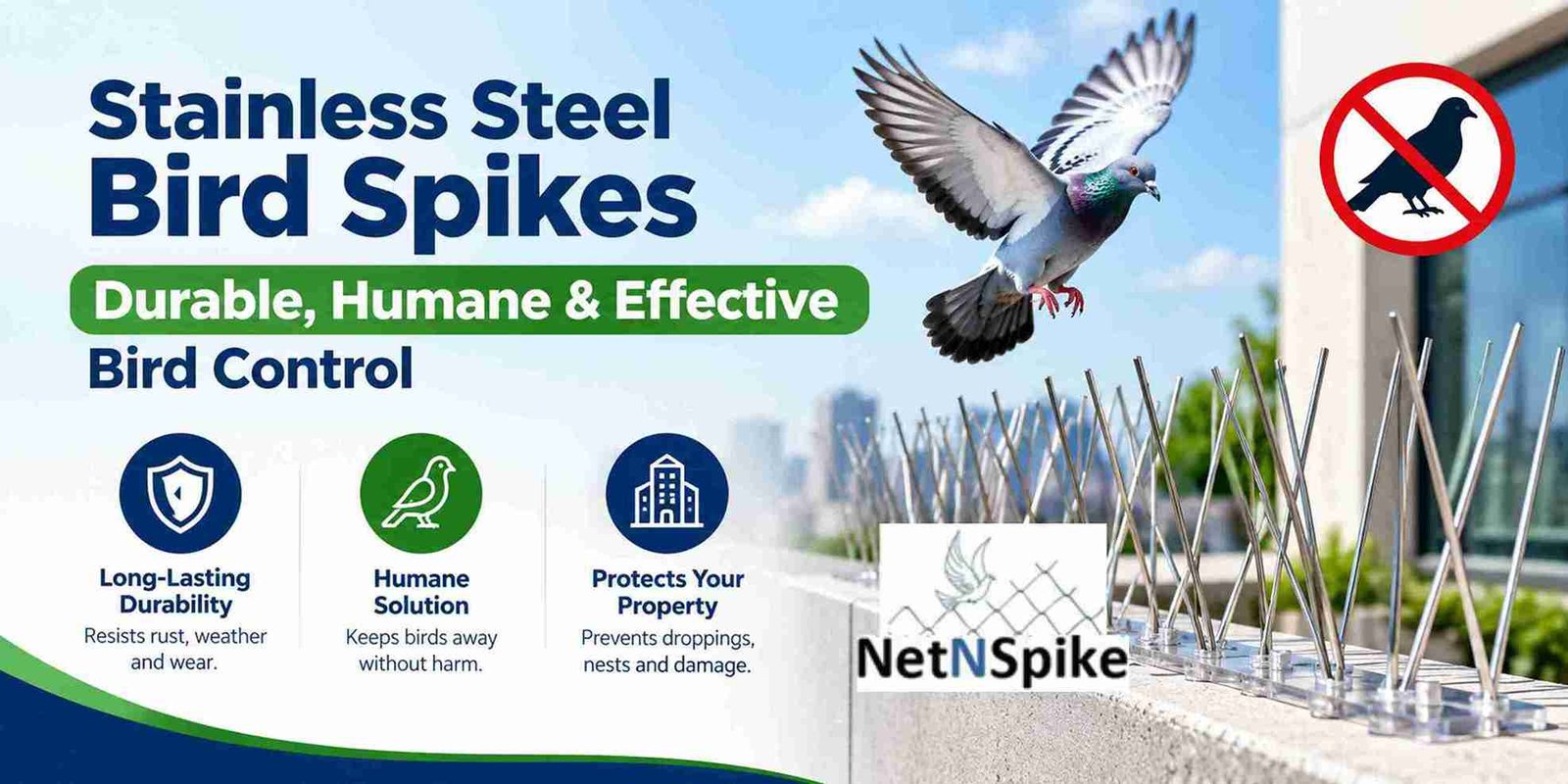
Bird pressure can turn ledges, signs, beams, rooflines, and storefront details into messy, noisy, high-maintenance areas. Stainless steel bird spikes offer a simple physical barrier that makes common landing and roosting spots uncomfortable without trapping birds or relying on chemicals. For property owners comparing bird control solutions, they are often a practical choice because they are visible enough to deter birds, low-profile enough for many building styles, and durable enough for long-term outdoor use.
Why Choose Stainless Steel Bird Spikes?
Stainless steel bird spikes help prevent birds from landing on narrow surfaces by removing the flat, comfortable space they want to use. The spikes do not need to harm birds to work; they create an uneven surface that encourages pigeons and other nuisance birds to move elsewhere. Compared with temporary scare tactics, stainless steel spikes are a more consistent option because they remain in place and continue working day after day.
This matters because bird problems usually grow when a location becomes part of a bird’s routine. Once birds treat a ledge or roof edge as a safe perch, droppings, nesting material, blocked drains, and ongoing cleanup can follow. Bird deterrent spikes are designed to interrupt that pattern before it becomes more expensive or frustrating to manage.
Stainless Steel Provides Long-Lasting Outdoor Performance
One of the biggest benefits of stainless steel bird spikes is durability. Outdoor bird control products must face sun, rain, temperature changes, wind, and routine building maintenance. Stainless steel resists corrosion better than many basic metals, which makes it a strong fit for exposed areas where plastic or lower-grade materials may become brittle, warped, or worn over time.
Metal bird spikes are especially useful on commercial buildings, warehouses, parking structures, schools, apartment communities, and other properties where the same ledges and beams need protection season after season. They can also be used around residential rooflines, patio covers, and architectural details when birds repeatedly gather in the same places.
Durability is not only about product life. It also affects how consistently the deterrent works. When spikes stay aligned and firmly attached, they maintain the physical barrier birds are trying to avoid. A weak, sagging, or broken deterrent can create gaps, and birds are quick to take advantage of spaces that feel safe.
Read Related – Core Benefits of Balcony Bird Net in High-Rise Buildings
A Humane Approach To Bird Control
Many property owners want bird control solutions that protect the building without creating unnecessary harm. Stainless steel spikes support that goal because they are a passive exclusion method. They do not poison birds, trap them, or depend on sticky substances that can create additional mess.
Instead, the product changes the surface. A bird looking for a stable place to land finds the area inconvenient and usually seeks a better perch. This makes stainless steel bird spikes a sensible option for people who want to reduce droppings and damage while still using a straightforward, non-lethal deterrent.
That said, humane results depend on correct use. Spikes should be installed where birds are landing or roosting, not where active nests or young birds are present. If nesting is already underway, local rules and species protections may affect what can be done, so it is wise to proceed carefully and consult a qualified professional when needed.
Where Do Bird Deterrent Spikes Work Best?
Bird deterrent spikes work best on narrow, defined surfaces where birds land, perch, or loaf, such as ledges, beams, signs, parapets, roof edges, pipes, and window sills. They are not usually the best standalone choice for large open areas because birds may simply land between rows or shift to a nearby flat surface. The most effective use starts with identifying the exact spots birds prefer, then covering those landing zones fully.
Common installation areas include:
- Building ledges: A frequent target for pigeons because ledges provide height, shelter, and visibility.
- Storefront signs: Spikes can help reduce droppings on signs, sidewalks, and entry areas below.
- Window sills and trim: Useful when birds gather near upper-level windows or decorative architectural details.
- Roof edges and parapets: Helps discourage birds from lining up along rooflines.
- Beams and rafters: Often used in semi-covered spaces such as loading docks, carports, and open structures.
- Pipes and narrow rails: Can prevent birds from settling on small horizontal surfaces.
Good coverage is important. If only part of a ledge is protected, birds may crowd into the unprotected section. For that reason, measuring the surface carefully and planning the layout before installation can save time and reduce the chance of repeat problems.
Lower Maintenance And Cleaner Property Surfaces
Bird droppings are more than an eyesore. They can stain surfaces, create unpleasant odors, make walkways look neglected, and increase the amount of time spent cleaning exterior areas. In busy properties, repeated cleanup can become a regular maintenance burden, especially around entrances, patios, loading zones, and customer-facing spaces.
Stainless steel spikes help reduce that burden by discouraging birds from gathering in the first place. Fewer birds on ledges generally means fewer droppings below. Over time, this can make a property easier to maintain and more welcoming for visitors, tenants, employees, or residents.
They can also protect brand perception. A storefront with droppings on the sign or sidewalk may send the wrong message even if the business is otherwise well run. A clean exterior feels more cared for, and preventing the problem is often easier than repeatedly washing the same areas.
Stainless Steel Spikes Are Versatile And Discreet
Although the word “spikes” can sound harsh, many stainless steel spikes are relatively slim once installed. From street level, they often blend into ledges, rooflines, and metal details more easily than bulky barriers. This makes them useful for properties that need effective bird control without drawing too much attention to the deterrent itself.
Their versatility also comes from the variety of surfaces where they can be used. Many products are designed with a base that can be attached to masonry, metal, wood, or other common building materials using appropriate fasteners or adhesives. The right method depends on the surface, exposure, and whether the installation needs to be permanent or removable.
For best results, property owners should think about both function and appearance. A neat, straight installation looks more professional and tends to perform better because it leaves fewer gaps. Planning around corners, curves, drainage paths, and cleaning access also helps ensure the spikes solve one problem without creating another.
How Do Stainless Steel Spikes Compare With Other Options?
Stainless steel spikes are best understood as one tool in a broader set of bird control solutions. They are excellent for ledges and narrow landing surfaces, while netting, wire systems, visual deterrents, or professional exclusion work may be better for other situations. The right choice depends on the bird species, pressure level, building design, and the specific behavior you need to stop.
A simple comparison can help:
| Option | Best use | Key consideration |
| Stainless steel bird spikes | Ledges, signs, roof edges, beams, sills | Long-lasting physical barrier for narrow surfaces |
| Plastic spikes | Similar ledge applications | May be less durable in harsh outdoor exposure |
| Netting | Large enclosed or semi-enclosed spaces | Requires careful installation and access planning |
| Visual deterrents | Light bird pressure or temporary pressure | Birds may get used to them over time |
| Sound or scare devices | Certain open areas | May not suit noise-sensitive properties |
This does not mean spikes are always the only answer. In some locations, stainless steel spikes work best as part of an integrated plan. For example, a building might use spikes on ledges, netting in a recessed area, and improved sanitation around food sources so birds have fewer reasons to stay nearby.
Product Selection Should Match The Property
When comparing products such as Bird B Gone stainless steel spikes, Bird Blinder stainless steel bird spikes, or other metal bird spikes, the most important point is fit. Look at the width of the surface, the type of birds involved, the base material, the mounting method, and the level of exposure. A product that works well on a narrow sign edge may not be ideal for a wide parapet unless the coverage pattern is appropriate.
Before choosing a product, consider this checklist:
- Identify the bird activity. Are birds landing briefly, roosting for long periods, or nesting nearby?
- Measure the surface. Width and length determine how much coverage is needed.
- Check the material. Concrete, metal, wood, and stone may require different attachment methods.
- Look for gaps. Corners, joints, and uneven ledges can become landing spots if ignored.
- Plan for cleaning first. Spikes should usually be installed on a clean surface for better adhesion and appearance.
- Think about access. Make sure maintenance teams can inspect the area safely later.
A thoughtful product choice reduces waste and improves performance. It also helps avoid the common mistake of installing too little coverage, then assuming the deterrent failed when birds simply moved a few inches away.
Installation Quality Makes A Major Difference
Even high-quality stainless steel bird spikes need proper installation to perform well. Surfaces should be cleaned before installation because dust, droppings, old sealant, and loose paint can interfere with attachment. If adhesives are used, they should be compatible with the surface and outdoor conditions. If mechanical fasteners are used, they should be placed securely without damaging the structure.
Spacing matters too. Rows should be positioned so birds cannot land in front of, behind, or between the spikes. On wider surfaces, more than one row may be necessary. On corners or irregular shapes, installers should avoid leaving open pockets that look small to people but large enough for birds to use.
Safety is another practical concern. Many spike installations happen at height, near roof edges, or above public walkways. If the location is difficult to access, hiring an experienced bird control or maintenance professional may be safer and more effective than a do-it-yourself approach.
Read Related – Benefits of Installing Pigeon Spikes Outdoors
The Takeaway For Cleaner, Better-Protected Buildings
Stainless steel bird spikes are a durable, humane, and practical way to discourage birds from landing on ledges, signs, rooflines, beams, and other narrow surfaces. They help reduce mess, protect exterior finishes, and support a cleaner appearance without relying on traps or chemicals.
The best results come from choosing the right product, covering the full landing area, and installing the spikes carefully on a clean, suitable surface. Whether you are comparing stainless steel spikes, bird deterrent spikes, or branded options like Bird B Gone stainless steel spikes and Bird Blinder stainless steel bird spikes, focus on fit, coverage, and long-term performance. A well-planned installation can make bird control easier to manage and help your property stay cleaner with less recurring effort.