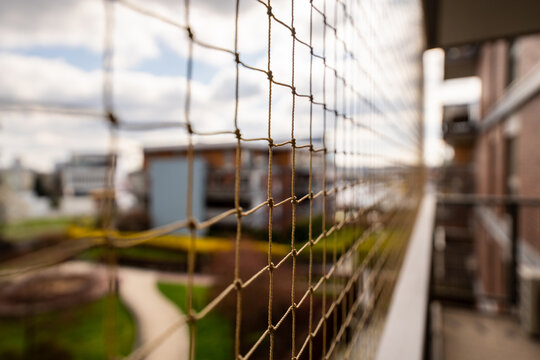
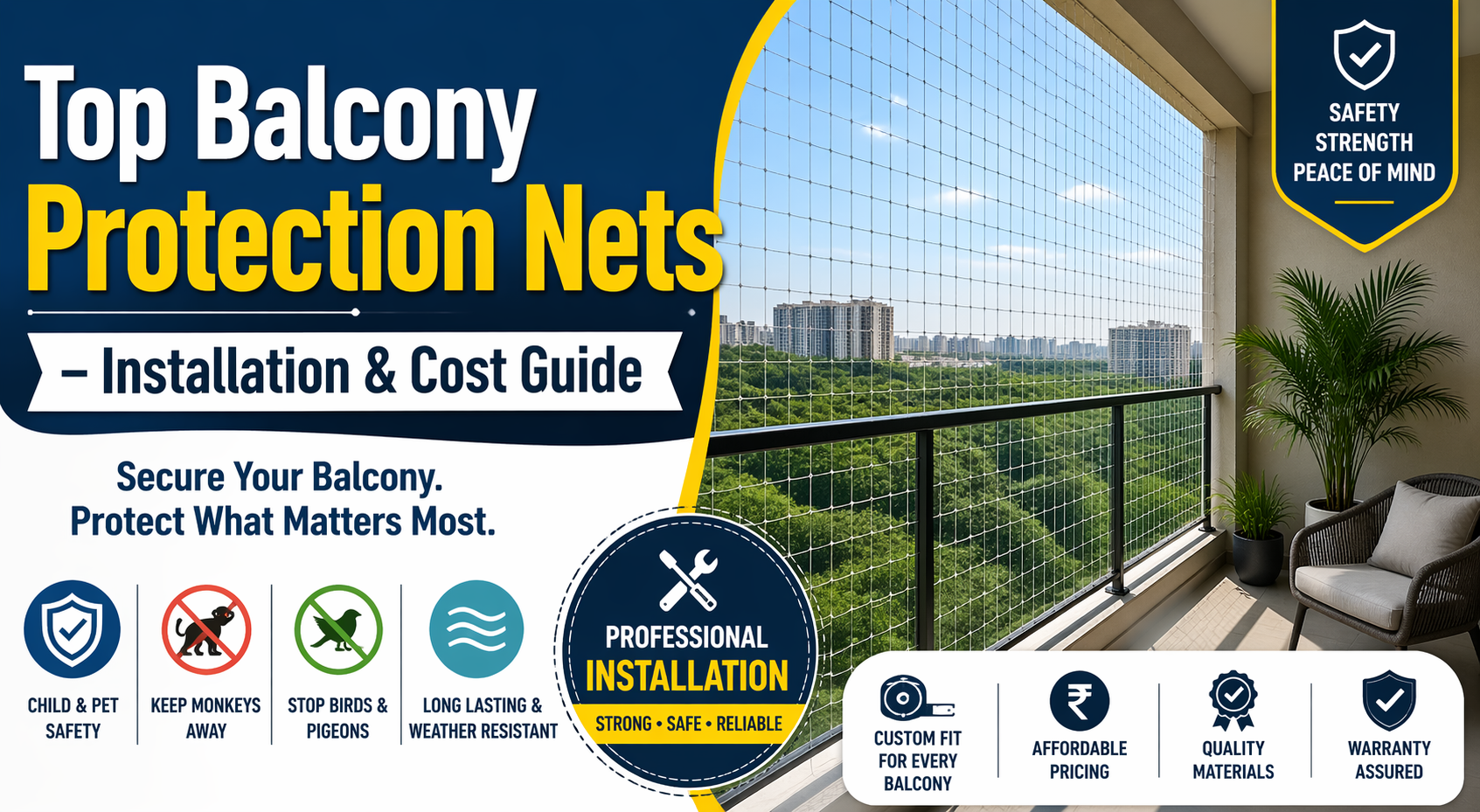
Balconies offer fresh air, sunlight, and a relaxing outdoor space—but they can also invite unwanted visitors like birds, monkeys, and even pose safety risks for children and pets. That’s where balcony protection nets come in. If you’re planning to secure your home, this detailed guide will help you understand the types, installation process, and cost of balcony safety nets so you can make an informed decision.
Why You Need Balcony Protection Nets
Balcony nets are becoming increasingly popular in urban homes, especially in areas where monkey menace or pigeon infestation is common. These nets act as a physical barrier that prevents animals from entering your space while ensuring proper ventilation and visibility.
Here are some key benefits:
- Safety for Children & Pets: Prevents accidental falls.
- Keeps Monkeys & Birds Away: Ideal for homes facing frequent animal disturbances.
- Maintains Cleanliness: Reduces bird droppings and nesting.
- Durable & Weather-Resistant: Designed to withstand sun, rain, and dust.
Read Also – Effective Ways to Get Rid of Pigeons: Complete Guide
Types of Balcony Protection Nets
Choosing the right type of net depends on your specific needs. Below are the most commonly used options:
1. Nylon Nets
These are lightweight, durable, and cost-effective. Nylon nets are widely used for pigeon and monkey protection. They are UV-stabilized and can last for years with minimal maintenance.
2. Invisible Grills (Transparent Nets)
Made from stainless steel cables coated with nylon, these provide a modern and sleek look while maintaining safety. They are ideal for high-rise apartments.
3. HDPE (High-Density Polyethylene) Nets
These nets are strong and weather-resistant. They are best suited for areas with heavy monkey activity as they can withstand pulling and pressure.
4. Anti-Bird Nets
Specifically designed with smaller mesh sizes to block pigeons and other birds from entering your balcony.
Balcony Net Installation Process
Installing a balcony protection net is relatively quick and hassle-free when done by professionals. Here’s a step-by-step overview:
Step 1: Site Inspection
A technician visits your home to measure the balcony area and understand your requirements.
Step 2: Material Selection
Based on your needs (monkey protection, bird control, or child safety), the appropriate net type and thickness are selected.
Step 3: Frame & Hook Setup
Hooks or anchors are fixed along the edges of the balcony using drilling or adhesive methods.
Step 4: Net Fixing
The net is stretched tightly across the balcony and secured with cables or ropes to ensure durability.
Step 5: Final Inspection
The installer checks for gaps, tension, and strength to ensure maximum safety.
Installation Time: Usually 2–4 hours depending on the balcony size.
Balcony Protection Net Cost in India
The cost of balcony nets varies depending on the material, quality, and installation area. Here’s a general price breakdown:
| Type of Net | Price Range (Per Sq. Ft.) |
| Nylon Nets | ₹15 – ₹30 |
| HDPE Nets | ₹20 – ₹40 |
| Invisible Grills | ₹150 – ₹300 |
| Anti-Bird Nets | ₹18 – ₹35 |
Factors Affecting Cost:
- Balcony size and height
- Type and thickness of net
- Installation complexity
- Location and labor charges
Average Total Cost:
For a standard balcony, installation may cost between ₹2,000 to ₹10,000.
DIY vs Professional Installation
While DIY kits are available online, professional installation is highly recommended for safety and durability.
DIY Installation:
- Lower cost
- Suitable for small balconies
- Risk of improper fitting
Professional Installation:
- Expert fitting and secure installation
- Long-lasting results
- Comes with warranty in most cases
Maintenance Tips for Balcony Nets
To ensure your balcony net lasts longer, follow these simple tips:
- Clean the net monthly using water or a soft brush
- Check for wear and tear every few months
- Avoid hanging heavy objects on the net
- Get it inspected annually by professionals
How to Choose the Best Balcony Net
Here are some quick tips to help you select the right product:
- Choose HDPE nets for monkey-prone areas
- Opt for invisible grills if aesthetics matter
- Check for UV protection and weather resistance
- Ensure the mesh size is suitable for your purpose
- Always go for trusted installers or brands
Read Related – Understanding Pigeon Infections: Causes and Treatments
Final Thoughts
Balcony protection nets are a smart and affordable investment for modern homes. Whether you’re dealing with monkeys, birds, or safety concerns, installing the right net can provide peace of mind and enhance your living space. With various options available in the market, understanding the installation process and cost factors will help you choose the best solution for your needs.
If you’re looking for a long-term, reliable solution, professional installation combined with high-quality materials is always the best choice.
FAQs
Q1. Are balcony protection nets safe for children?
Yes, they are designed to prevent falls and provide a secure barrier.
Q2. Can monkeys damage balcony nets?
High-quality HDPE nets are strong enough to resist monkey interference.
Q3. How long do balcony nets last?
Typically 3–5 years, depending on material and maintenance.
Q4. Do balcony nets block airflow or sunlight?
No, they are designed to allow proper ventilation and light.Q5. Is drilling required for installation?
In most cases, yes. However, no-drill options are also available.